
Early detection of prostate cancer
Introduction
Prostate cancer is one of the most common cancers in men after age 50. When detected early, treatment options are more numerous, less invasive, and the chances of recovery or good control are much higher. THE Early screening aims to identify warning signs, even in the absence of symptoms, in order to initiate optimal treatment.
“Screening is not alarmist: it is taking action to preserve quality of life.”
Why detect early?
- Diagnosis at a more favorable stage: small, localized tumors are often easier to treat than advanced forms.
- Fewer complications: simpler procedures, less risk of spread, fewer severe side effects.
- Better prognosis: improved survival and quality of life when intervention is performed before the disease progresses.
- Personalization of care: based on the screening results, choose the most appropriate strategy (active surveillance, surgical treatment, radiotherapy, etc.).
Prostate cancer screening
Who is screening for?
- All men aged 50 and over: recommended age to start systematic screening.
- Men from 45 years old if family history of prostate cancer (father, brother) or risk factors (Afro-Caribbean ancestry, personal urinary history, etc.).
- Presence of persistent or unusual urinary symptoms, although often the cancer is silent for the first few years.
Signs that should alert you
Even if screening is often carried out without symptoms, certain signs should prompt you to consult quickly:
- Difficulty urinating (weak stream, slow start)
- Nocturia (frequent need to urinate at night)
- Blood in urine or semen
- imaging for staging if needed
- Bone or lower back pain (sometimes, if diffuse)
What does screening involve?
Early detection of prostate cancer is based on several components, adapted to each patient:
1️⃣ Interview and medical history
We look for symptoms, personal and family risk factors, and prostate medical history.
2️⃣ Rectal examination
Simple clinical examination to detect nodules, irregularities or hardened areas in the prostate.
3️⃣ PSA (Prostate Specific Antigen) Test
Blood test to measure PSA levels in the blood. An elevation may indicate a prostate abnormality but is not specific to cancer.
4️⃣ Additional examinations depending on the results
If the rectal examination or PSA level is worrying, we can suggest:
- prostate ultrasound.
- Prostate MRI to better locate potential lesions
- prostate biopsies, guided (often under ultrasound or MRI) to confirm or rule out cancer
- imaging for staging if needed
Benefits and limitations of screening
Avantages
- Détection précoce, possibilité de traitement moins agressif
- Augmentation des chances de guérison ou de long contrôle
- Réduction de la mortalité à long terme dans certains groupes de patients
Limites / Risques
- Faux positifs : PSA élevé sans cancer, qui peuvent conduire à des examens invasifs non nécessaires
- Risque de surdiagnostic : cancers non évolutifs qui ne nécessitent pas toujours un traitement immédiat
- Effets secondaires possibles des traitements : incontinence, troubles de la fonction sexuelle…
When and how to decide?
-
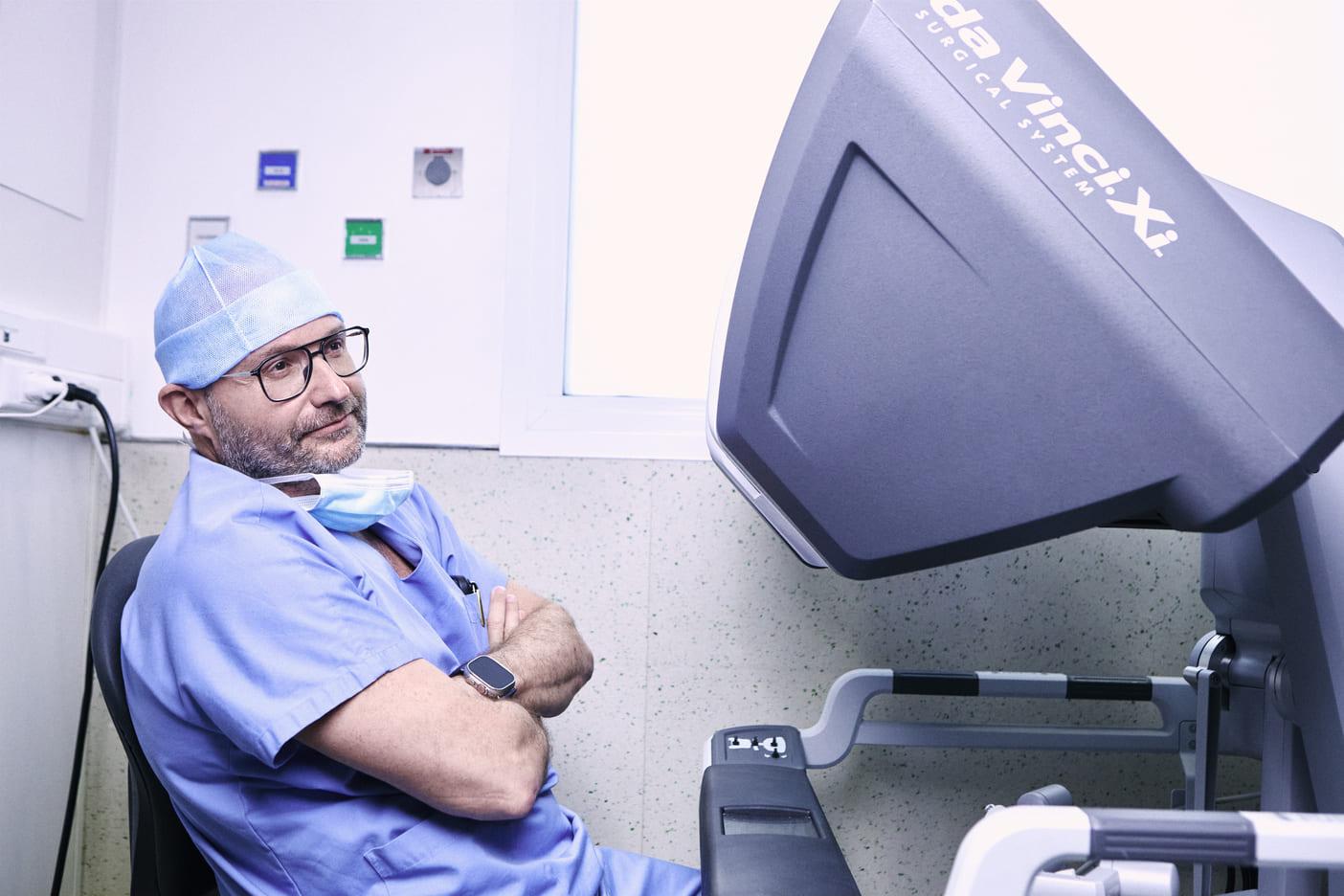
The decision to get tested is individual. Dr. Olivier Dumonceau suggests a shared approach :
- assess your personal risks (age, history, symptoms, lifestyle)
- inform you clearly about the benefits and disadvantages
- define together the most appropriate strategy (active surveillance or intervention)
Your role in screening
- Be informed: understand what PSA is, digital rectal examination, additional tests.
- Follow the schedule recommended for your age and background.
- Report any new symptoms to your urologist.
- Adopt a healthy lifestyle: balanced diet, physical activity, avoiding excess weight, etc., because certain risk factors can be modified.
Take the first step
Do you suspect a prostate adenoma?
Requirements
Expertise
- Prostate surveillance after age 50
- Prostate cancer screening
- REZUM (steam thermotherapy)
- UroLift (trans-urethral implants)
- Holmium laser / ThuLEP
- Robotic-assisted radical prostatectomy
Patient pathway
Let me introduce you to the classic patient journey, my approach to urology and the way I work.
Do you want to get early detection of prostate cancer?
Early diagnosis increases your chances of recovery and less invasive treatment.
🩺 Screening consultation and PSA assessment
📞 Make an appointment today