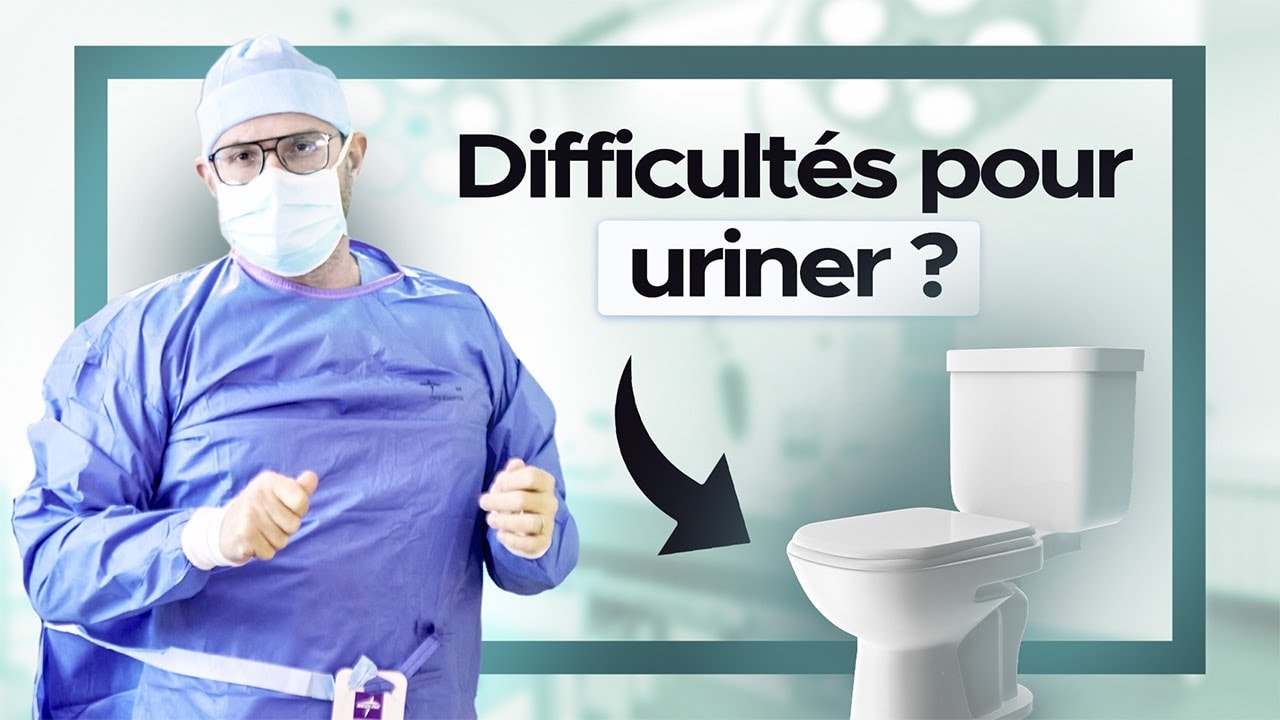
You have benign prostatic hyperplasia (BPH), which is a benign enlargement of the prostate gland that is compressing the urethra and making urination difficult. Here, I explain the current treatment options, their benefits and drawbacks, to help you understand what may be available based on your symptoms and priorities.
 Comment traiter mon adénome de prostate ?Dr Olivier Dumonceau
What does it feel like? Symptoms to be aware of
The most frequent signs associated with prostate adenoma are:
- Polaquiuria : frequent urination, especially at night.
- Urinary urgency : a sudden and compelling need to urinate.
- Dysuria : decreased force of the stream, sensation of effort to urinate.
Treatment will depend on the severity of these symptoms, their impact on quality of life, and the size and configuration of the prostate.
Treatment strategy: from the simplest to the most invasive
We typically follow a climbing route:
- Medical treatment
- Minimally invasive treatments
- Endoscopic surgical treatment
1. Medical treatment
We always start with medication. Several classes exist:
- Plant extracts : they can help decongest the prostate and reduce certain symptoms (frequent urination, urgency). Their effect is modest and suitable for mild symptoms.
- Alpha-blockers : act quickly by opening the bladder neck and improving the urinary stream. They often provide rapid relief from dysuria.
- Prostate-slimming drugs : these treatments, which take effect after about six months, decrease the size of the prostate and can reduce the risk of long-term worsening.
Two medications can be combined to obtain complementary effects. The choice takes into account symptoms, contraindications, and possible side effects.
2. Minimally invasive treatments
Between medication and definitive surgery, there are now less invasive options that improve urinary flow while preserving sexuality, particularly ejaculation:
- UroLift : implants are placed to separate the prostate walls and open up the urethra. The effect on the sensation of flow is immediate, and the procedure generally preserves ejaculation.
- Rezūm : Water vapor is injected into the prostate to ablate and soften the tissues, resulting in a gradual reduction in volume. Rezūm also generally preserves ejaculatory function.
These treatments offer a good compromise: significant improvement in symptoms for many patients, rapid recovery, and preservation of sexual function. The improvement may be slightly less than that achieved with laser treatment, but sufficient to restore urinary comfort.
3. Endoscopic surgical treatment
When medication is no longer sufficient or is poorly tolerated, surgery is indicated. Today, the procedure is most often endoscopic, performed without external incision, through natural openings.
The common technique involves emptying the inside of the prostate with a laser (for example, a holmium laser). This very effectively restores a good urinary stream and provides lasting relief from the obstruction. The main drawback is the loss of normal ejaculation : the ejaculate becomes retrograde, meaning it flows back into the bladder and is no longer expelled during orgasm.
How to choose? Advantages and disadvantages summarized
- Medication : start there. Minimally invasive. Effect varies depending on the class. Medications that reduce size take several months to work.
- UroLift and Rezūm : generally preserve ejaculation, rapid recovery, noticeable improvement of symptoms but sometimes less than a complete laser treatment.
- Endoscopic laser : maximum effectiveness on urinary flow and obstructive symptoms, but frequent retrograde ejaculation.
Practical points and follow-up
The choice depends on several factors: the severity of symptoms, the size and anatomy of the prostate, tolerance to medications, the importance of preserving ejaculation, comorbidities, and personal preferences. A urological assessment and a discussion with your doctor will help determine the best option.
Signs that should prompt a quick consultation: marked worsening of dysuria, inability to urinate (acute retention), recurrent urinary tract infections, or signs of kidney damage.
Quick summary
- We usually start with medication.
- If medication is not suitable, minimally invasive treatments (UroLift, Rezūm) can be offered which improve the flow and preserve sexuality.
- If necessary, endoscopic laser surgery offers the most significant improvement in flow rate, at the cost of retrograde ejaculation.
Frequently Asked Questions
Can medication and minimally invasive treatments be combined?
Yes. Certain situations benefit from a temporary association to optimize the outcome before or after a procedure.
Are the treatments permanent?
Endoscopic surgery is often definitive. Minimally invasive treatments may require reassessment in the longer term but provide real relief. Medications are generally taken as long as the clinical benefit is present.
Conclusion
Today, several effective treatment options exist for benign prostatic hyperplasia (BPH). My goal is to tailor treatment to each patient’s symptoms and priorities: maximizing urinary comfort while respecting sexual function whenever possible. A urological consultation will help determine the best approach based on your prostate condition and your expectations.
If you have specific questions about your situation, make an appointment for a personalized assessment.