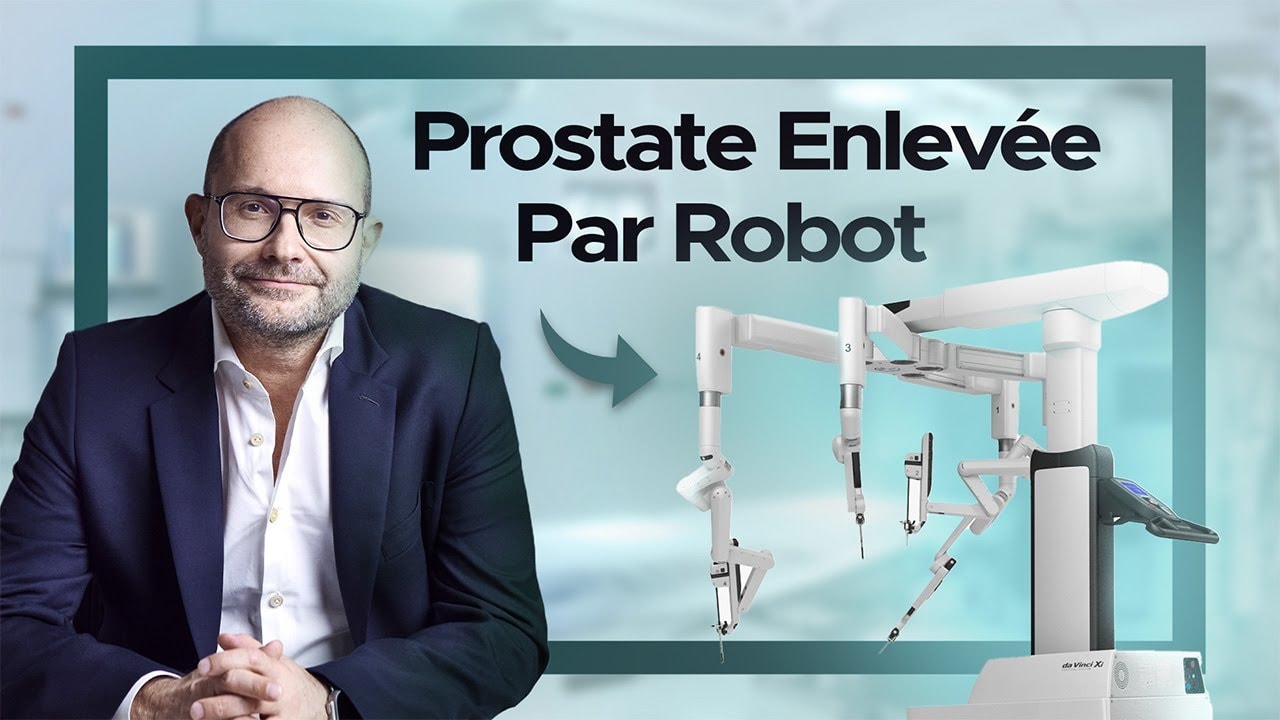
Robot-assisted radical prostatectomy involves removing the entire prostate gland to definitively treat prostate cancer. Performed laparoscopically with the aid of a robot, this technique allows for a highly precise procedure that best preserves the structures surrounding the prostate: the nerves involved in sexual function and the sphincters responsible for urinary continence.
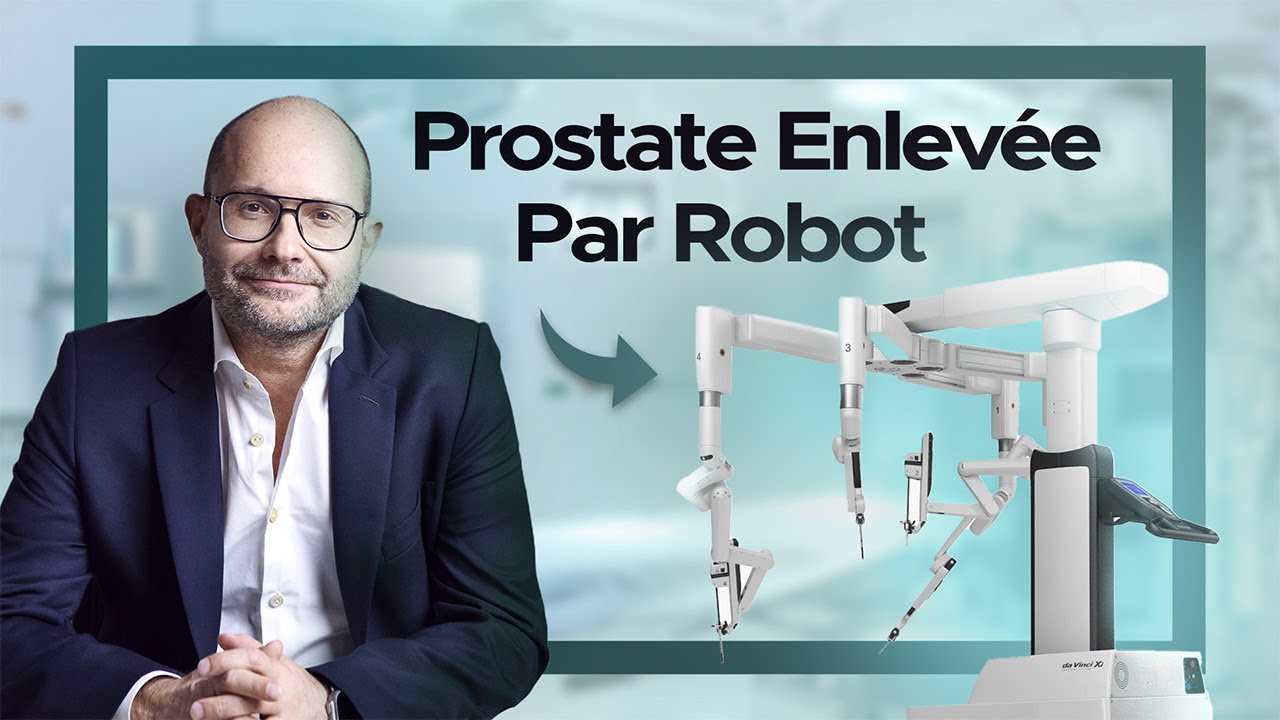 Prostatectomie radicale robot-assistée, c'est quoi ?Dr Olivier Dumonceau
What exactly am I doing?
During the procedure, the prostate is completely removed. The main goal is to eliminate the tumor while minimizing functional consequences. The robot does not operate in your place, but it offers precision, a greater range of motion, and enhanced vision that facilitates delicate dissection around nerves and sphincters.
The advantages of surgery compared to other treatments
Surgery offers several advantages:
- One-step treatment : surgical removal removes the entire prostate and therefore most of the visible cancerous tissue.
- Complete anatomopathological diagnosis : analysis of the surgical specimen gives a precise view of the actual extent of the cancer, sometimes greater than what biopsies show.
- Possibility of treating two problems at the same time : in patients already experiencing urinary problems related to an enlarged prostate, removal can improve these symptoms.
What the robot changes on a daily basis
Robot-assisted surgery has transformed patient care:
- Operating times are often shorter.
- Shorter and more controlled anesthesia.
- Reduced hospitalization: the procedure can be carried out on an outpatient basis (arrival in the morning, discharge in the evening) or with only one night of hospitalization depending on the case.
The decision to extend hospitalization is left to the medical team depending on the patient’s condition.
What to do after the procedure? Follow-up
Follow-up is straightforward and relies primarily on PSA (prostate-specific antigen) testing. After a complete prostatectomy, PSA should become undetectable . A rise in PSA is called biochemical recurrence and sometimes precedes a clinical recurrence by several months. This window allows for early intervention, for example, with adjuvant radiotherapy if the histopathological analysis warrants it.
Conversely, starting with radiotherapy and then having secondary surgery is much more complex and comes with an increased risk of adverse effects.
Side effects and treatment objectives
Surgery can be daunting, especially because of the potential side effects. My goal is clear:
- Treating cancer effectively.
- To allow a return to normal life without reducing life expectancy.
- Minimize the impact on quality of life (continence, sexual function).
Robotic techniques and nerve-sparing strategies aim precisely to preserve these functions when possible and reasonable from an oncological point of view.
Screening and treatment decisions
I recommend starting screening at age 50. Prostate cancer is the most common cancer in men in France, with approximately 50,000 new cases per year . It is a disease that is easily detected and, when caught early, is often treatable with few long-term effects.
Important: Detecting cancer does not automatically mean immediate treatment is necessary. Many diagnoses today correspond to microfocals of cancer that can simply be monitored (active surveillance). The treatment decision is made on a case-by-case basis, depending on the aggressiveness of the cancer, the patient’s age, and their wishes.
Practical points and useful keywords
- This technique is commonly performed with Da Vinci type robotic systems.
- Alternatives and complementary procedures in modern urology: Holmium LASER for adenoma, procedures such as REZUM or UROLIFT for benign prostatic hyperplasia.
- The combination of surgery and radiotherapy may be offered if the post-operative analysis shows margins or residual risk.
In summary
Robot-assisted radical prostatectomy is an effective and modern option for treating prostate cancer. It allows for complete removal of the prostate, precise pathological analysis, and, thanks to robotics, maximum preservation of function when possible. Follow-up is simple and based on PSA testing, and screening remains a key step in determining the best treatment strategy, from monitoring to surgical intervention.
If you have any questions about treatment or screening, talk to your urologist to decide together on the best strategy for your situation.