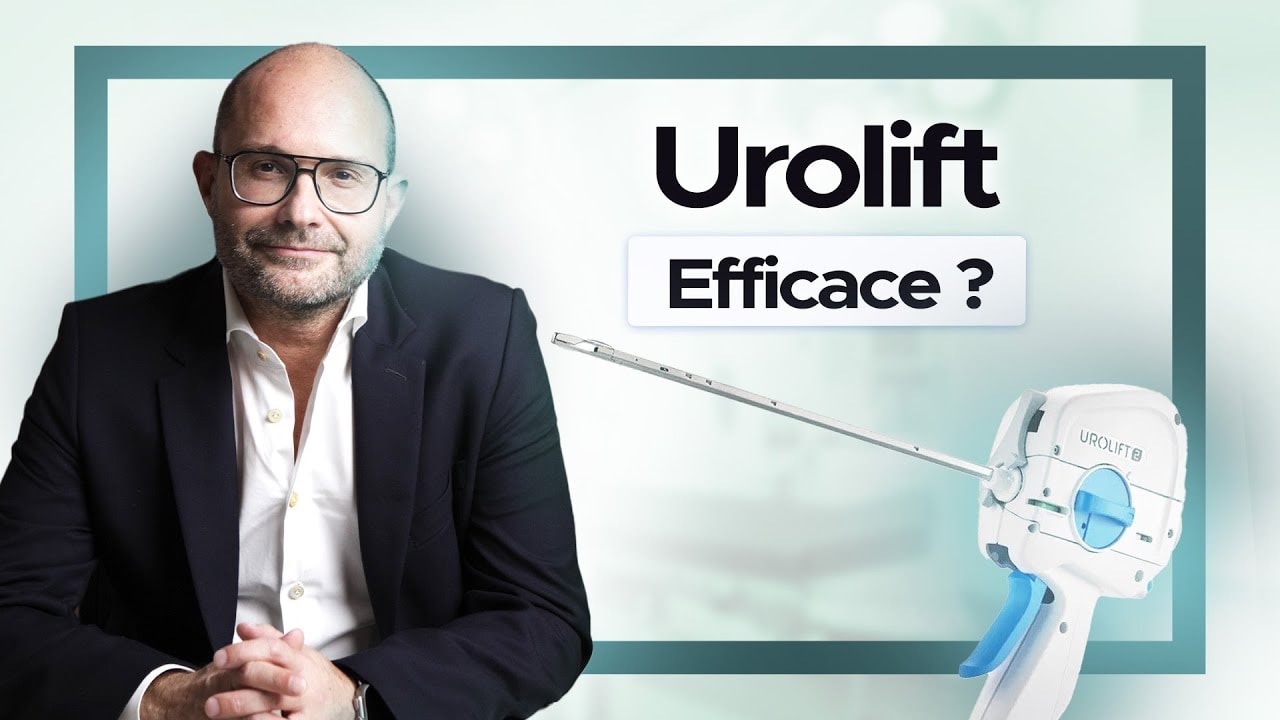
Here I describe a minimally invasive technique for treating benign prostatic hyperplasia (BPH), a common condition after age 50 that obstructs urine flow. My goal is to explain simply what Urolift is, how the procedure is performed, its benefits, and its risks so that you can discuss it calmly with your urologist.
 Urolift c'est quoi ?Dr Olivier Dumonceau
What is prostate adenoma?
Benign prostatic hyperplasia (BPH), also known as prostate adenoma, is a progressive enlargement of the prostate gland. As it enlarges, the prostate compresses the urethra, the tube that carries urine out of the body, leading to symptoms such as:
- a weak or intermittent urinary stream;
- frequent urges to urinate, especially at night;
- difficulty emptying the bladder completely.
Treatment options: medication and traditional surgery
Drug treatments (alpha-blockers, 5-alpha reductase inhibitors) can improve symptoms, but their effectiveness sometimes decreases over time and some cause sexual side effects, including retrograde ejaculation.
When medication is no longer sufficient, the standard treatment involves removing the adenoma. This procedure significantly improves urinary flow, but is often accompanied by a change in ejaculation (retrograde ejaculation) and, depending on the technique, risks of incontinence or erectile dysfunction.
What is Urolift?
Urolift is a minimally invasive, alternative solution performed through natural channels (endoscopy) without incision. The principle is simple: small implants (sometimes called “harpoons”) are placed inside the urethra to separate the two prostatic lobes that compress the canal, thus restoring satisfactory urinary flow.
How does the procedure unfold?
- The procedure is performed under very short general anesthesia or, in some cases, under local anesthesia.
- It is performed on an outpatient basis: admission in the morning and discharge a few hours later.
- No external incision is necessary and, as a general rule, it is not necessary to insert a bladder catheter after the procedure.
- The implants are simple suture threads held by surgical clips, identical to the materials commonly used in surgery.
Advantages of the Urolift
- Preservation of sexual function: no risk of incontinence and no risk of erectile dysfunction. The risk of retrograde ejaculation is less than 1%.
- Minimally invasive: no incision, endoscopic procedure via natural pathways.
- Outpatient: short procedure, return home the same day.
- Good tolerance: patients generally do not feel the presence of the implants.
Possible side effects and complications
Like any urological procedure, Urolift carries some risks, most of which are temporary:
- Bleeding: blood in the urine or semen, usually of short duration (a few days to a maximum of one month).
- Urinary tract infection: can occur and is effectively treated with antibiotic therapy without long-term consequences if appropriate management is provided.
- Hematoma and perineal pain: rare, related to the implant, which can cause localized pain for a few days to a maximum of one month.
What to expect after the procedure?
After Urolift, an improvement in urinary flow is often noticed quickly. Minor bleeding or occasional discomfort may occur. If fever, significant pain, or persistent bleeding develops, it is important to consult a doctor to rule out infection or other problems.
The implants are not felt in daily life and require no special maintenance. Most patients quickly resume their normal activities.
Who is the Urolift suitable for?
Urolift is an attractive option for patients seeking an alternative to medication and traditional surgical procedures, particularly when preserving ejaculation and sexual function is a priority. The choice of treatment will depend on prostate anatomy, the severity of symptoms, and the patient’s expectations. A specialist consultation will determine if Urolift is the best option for you.
Conclusion
Urolift is a minimally invasive, well-tolerated treatment that improves urinary flow while minimizing the impact on sexuality. As with any treatment decision, it is important to discuss the benefits and risks with your urologist to determine the best solution for your individual situation.
If you are considering this treatment, discuss alternatives (medications, other minimally invasive techniques such as REZUM or laser) and practical details of the procedure with a specialist.