
Removing a large, blocked prostate volume
Regaining free flight despite a large adenoma
Removal of a large prostatic volume: surgery, HoLEP laser or adenomectomy with Dr. Olivier Dumonceau, urologist in Paris 17th.
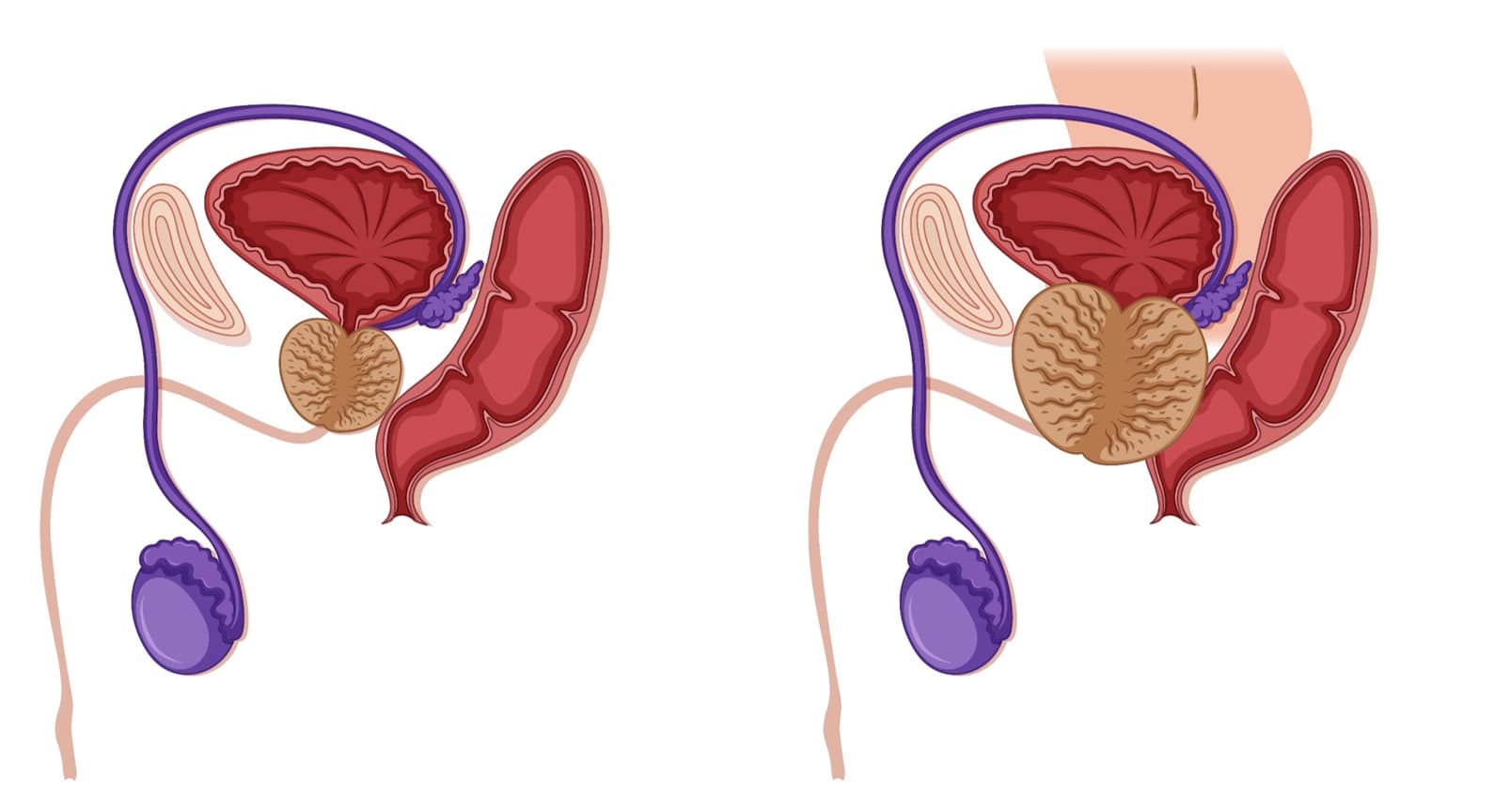
Introduction
An enlarged prostate gland causes significant compression of the urethra and bladder base, resulting in a mechanical obstruction to urine flow. When medication is no longer sufficient, surgical or endoscopic intervention to remove or unblock the prostate becomes necessary.
It is not just about relieving symptoms: it is often an essential step to preserve bladder function, avoid complications (acute retention, infections, kidney failure) and restore good urinary comfort.
The chosen procedure must be adapted to your anatomy, your general condition, your expectations and the size of the prostate.
What is meant by “large, blocking prostate volume”?
Expertise in Laser Enucleation
 Expertise Énucléation au laserDr Olivier Dumonceau
Signs and suggestive complications
Pre-intervention diagnosis
Before making any decision, a thorough assessment is essential to ensure the suitability of the indication:
- Clinical interview and symptom scores (IPSS, impact on quality of life)
- Physical examination (digital rectal exam) to assess the size and consistency of the prostate
- Urine analysis and blood tests to rule out infection, hematuria, and to assess kidney function
- Uroflowmetry/urine flow rate and post-void residual measurement to quantify obstruction
- Bladder and prostate ultrasound to measure prostate volume, detect a median lobe, or identify complications
- Bladder function/urodynamic assessment in cases of suspected concomitant bladder dysfunction
- Assessment of general health, comorbidities, and anticoagulants to evaluate surgical risks
This assessment helps to define the extent of the obstruction, the remaining bladder capacity, and the optimal choice of intervention.
Expertise
What are the side effects of prostate adenoma treatments?
 Quels sont les effets secondaires des traitements de l'adénome de prostate ?Dr Olivier Dumonceau
Techniques for removing the blocking volume
Why consult a specialist urologist?
Experience
Patient journey office
 Parcours Patient cabinetDr Olivier Dumonceau
Side effects of prostate treatments
Patient Journey
Let me introduce you to the typical patient journey, my approach to urology, and how I work.
Are you suffering from urinary blockage due to an enlarged prostate?
Minimally invasive surgical solutions allow for fast and lasting relief.
Urology Clinic Paris Opéra – Paris 17th
Expertise in laser surgery and modern techniques
Book your appointment today
FAQ – Frequently Asked Questions
What is meant by a "large prostate volume"?
A normal prostate weighs 20 to 25 grams. A prostate weighing over 80 to 100 grams is considered a large adenoma: at this stage, the obstruction is often significant, and some minimally invasive techniques are no longer effective. The volume is precisely measured by ultrasound or MRI.
What is the best technique for a large adenoma?
Laser enucleation (ThuLEP/HoLEP) has become the standard: it removes the entire adenoma through natural pathways, regardless of its size, with less bleeding and a shorter hospital stay than classic surgical adenomectomy.
What are the risks of not treating a blocking adenoma?
Chronic obstruction can lead to complete urinary retention, infections, bladder stones, and eventually, bladder distension and kidney damage. Treating these complications before they occur preserves bladder function.
Does surgery for a large adenoma protect against prostate cancer?
No. Enucleation removes the adenoma (central area) but leaves the prostatic capsule in place, where cancer can develop. Therefore, PSA monitoring remains necessary after the procedure.
Dr Olivier Dumonceau's expertise
Chirurgien Urologue à Paris

Solutions exist: let's talk.