
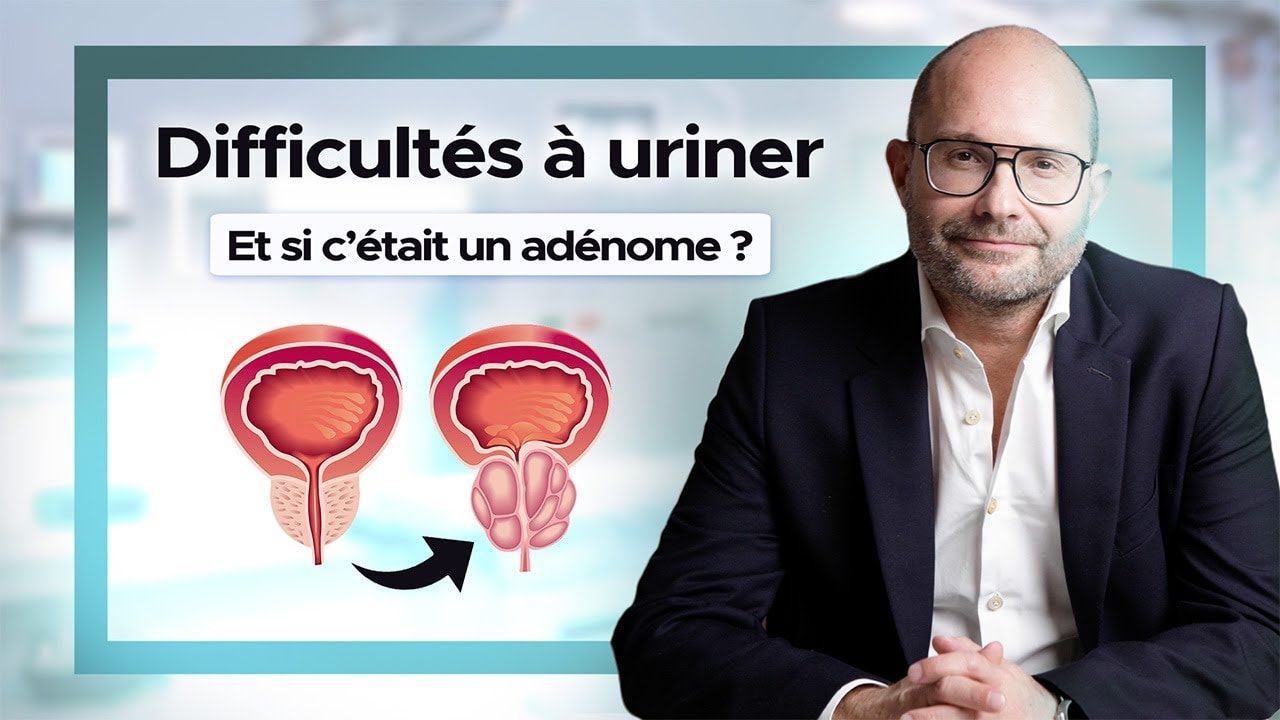
After age 50, many men notice changes in their urination pattern. The stream becomes less forceful, the urge to urinate is more frequent, sometimes urgent, and their nights become more disrupted. Very often, behind these urinary problems lies a benign but common cause: benign prostatic hyperplasia ( BPH) , also known as an enlarged prostate .
This is simply an enlargement of the prostate gland . It's an extremely common problem with age, and it deserves to be recognized, understood, and addressed at the right time.
What is a prostate adenoma?
The prostate is a walnut-sized and walnut-shaped gland located just below the bladder. It surrounds the beginning of the urethra, the tube that carries urine out of the body.
With age, this gland can enlarge. When it increases in size, it will gradually compress the urethra and hinder the flow of urine.
A simple image helps to understand the mechanism: the urethra passes through the prostate much like the core passes through an apple. If the apple grows larger, it tightens around the core. This is exactly what can happen with the prostate and the urethra.
Why does this happen so often after age 50?
Age is by far the main contributing factor. In practice, prostate adenoma appears mainly after age 50, and its frequency increases with age.
It is estimated that after this age, there is a significant probability of developing benign prostatic hyperplasia (BPH) in the following years. It is therefore a very common, almost routine, situation encountered in urology consultations.
The exact cause cannot be reduced to a single factor, but several elements are well recognized:
- Aging , which gradually alters the functioning of the prostate.
- Prolonged exposure to testosterone , the male hormone, is probably involved in this progressive development.
- The family background , because it is not uncommon to find several cases in the same family, in the father or brothers.
Although no single gene for benign prostatic hyperplasia has been clearly identified, there is very likely a genetic component .
Prostate adenoma and cancer: two different things
This is a crucial point, and we must be very clear about it: prostate adenoma is not cancer .
It does not turn into prostate cancer. Nor does it promote the development of cancer. And of course, it does not protect against it either.
In other words, these are two different diseases , which can sometimes coexist in the same man simply because they become more frequent with age.
What symptoms should be monitored?
A prostate adenoma can be completely silent. This is sometimes even the case for a long time. An enlarged prostate does not automatically cause discomfort, and in the absence of symptoms, intervention is not necessarily required.
However, when the adenoma begins to compress the urethra or disrupt bladder function, several urinary symptoms may appear.
1. Difficulty urinating
This is called dysuria . Urine comes out less easily, the stream becomes weaker, and urination may require more effort.
2. Frequent urges
This is called pollakiuria . It can occur:
- during the day,
- at night,
- or both.
Getting up several times a night to urinate is a very common reason for consultation in men over 50.
3. Urgent urges to urinate
Urgency can also occur, meaning a sudden and urgent need to urinate that is difficult to postpone. In some cases, this urgency can even lead to urinary incontinence .
Is treatment always necessary?
No. It all depends on the presence and intensity of the symptoms.
If the adenoma is asymptomatic , in other words if it does not cause any discomfort, there is no systematic reason to do anything.
However, when urinary problems appear, it becomes important to consult a urologist. The goal is twofold:
- to improve urinary comfort ,
- to avoid or slow down the progression of prostatic adenoma.
The longer you wait for the symptoms to develop, the more significant the discomfort can become.
When should you consult a urologist?
You should consult a doctor as soon as you feel you are no longer urinating as usual, especially if you are over 50 and have one or more of the following signs:
- a weaker urine stream
- difficulties starting or emptying the bladder properly
- frequent urges to urinate,
- repeated nighttime awakenings to urinate,
- overwhelming desires,
- leaks related to the emergency.
This consultation will allow us to assess the situation and discuss the best course of action.
The role of PSA: useful, but not for measuring adenoma
When a man consults for urinary problems related to a possible adenoma, it may be useful to perform a PSA test .
However, it's important to understand its role: PSA is not used to assess prostate adenoma . On the other hand, it can be used in prostate cancer screening .
This ties in with what was said above: BPH and cancer are two separate subjects, but consulting for urinary symptoms is also an opportunity to take stock of prostate health more globally.
What treatments are available?
Several treatments for benign prostatic hyperplasia (BPH) are available today. The choice depends on the discomfort experienced, the severity of the symptoms, and each patient's individual situation.
The key takeaway here is that urinary problems should not be dismissed as minor. Early intervention often allows for better control of symptoms and limits their progression.
Key takeaways
- Prostate adenoma corresponds to a benign enlargement of the prostate gland.
- It is very common after age 50 .
- It may be asymptomatic or, conversely, cause marked urinary discomfort.
- The main signs are dysuria , pollakiuria and urgency , sometimes with leakage.
- It is not cancer and it will not turn into cancer.
- If symptoms are present, a consultation with a urologist is important to make a diagnosis, discuss treatment and, if necessary, perform a PSA test as part of prostate cancer screening.
If urinating becomes difficult after age 50, there's no need to panic or ignore it. In many cases, it's due to benign prostatic hyperplasia (BPH), a common and well-known condition for which there are solutions. The most important thing is to recognize the signs and consult a doctor at the right time.