
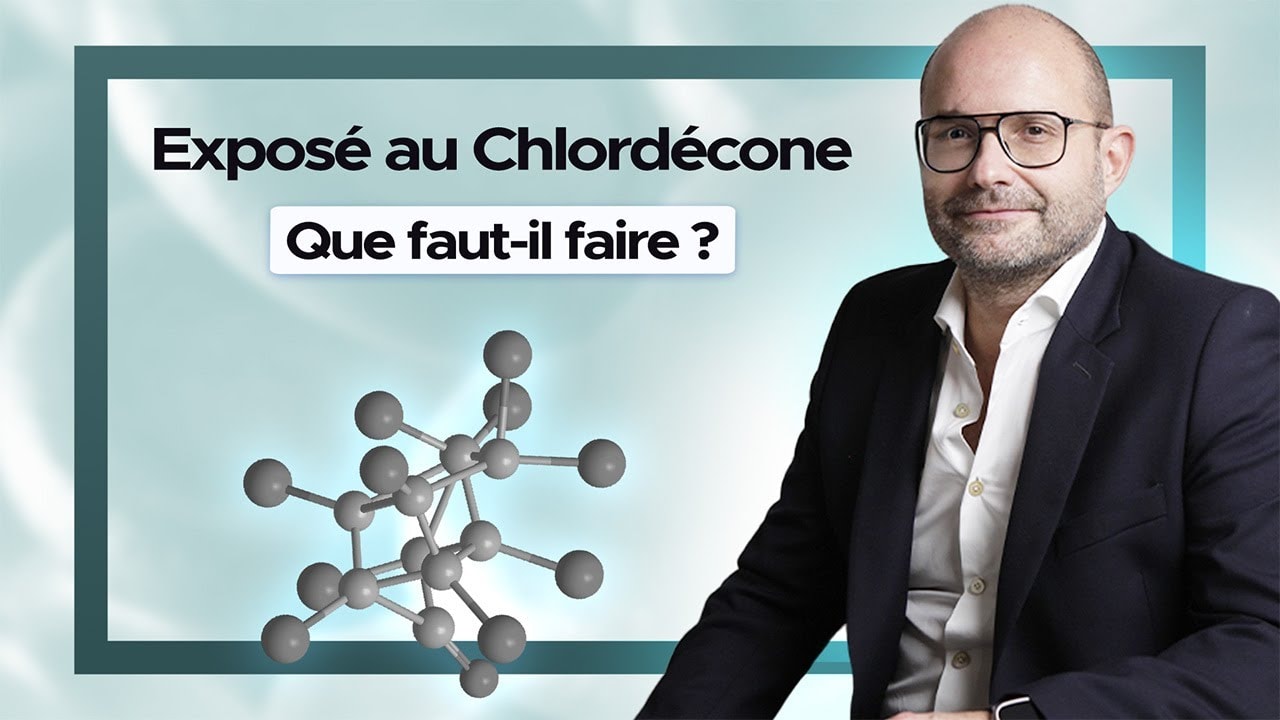
Chlordecone is both an environmental disaster and a major health scandal in the French West Indies. In Guadeloupe and Martinique, this pesticide, used for over twenty years in banana plantations, continues to cause concern today, particularly because of its link to prostate cancer .
If you are from the West Indies or think you may have been exposed to chlordecone, it is essential to understand three things: what this product is, why it is dangerous, and how to organize appropriate screening .
Chlordecone, a pesticide used extensively in the West Indies
Chlordecone is a pesticide that has been used in banana plantations all over the world, but its history is particularly significant in the French West Indies. It was used in Guadeloupe and Martinique between 1972 and 1993 .
This point is crucial, because this product was not just another pesticide. Its harmfulness had been known for a long time. It was banned in the United States in the early 1970s, then classified as dangerous by the WHO in 1979. Yet, in mainland France, it was only banned in 1989, while in the French West Indies its use continued until 1993.
This timeline largely explains why chlordecone remains associated with a profound sense of injustice today. The French state was even sued for poisoning, before being cleared of all charges in 2023.
Why is chlordecone such a health concern?
Chlordecone is recognized as an endocrine disruptor , that is, a product capable of interfering with the hormonal functioning of the body.
Its effects are not limited to a single organ. It can lead to:
- neurotoxicity ,
- liver toxicity ,
- and, a particularly important point here, an increased risk of prostate cancer .
This link with the prostate is now established. Chlordecone is associated with a higher risk of developing this cancer, but also with more worrying characteristics: earlier onset and more aggressive forms .
A major impact in the French West Indies
The environmental situation is now entrenched. It is estimated that approximately a quarter of the territory of the French Antilles is contaminated by chlordecone, and that this pollution will persist for several hundred years .
The contamination concerns:
- the soils,
- the waters,
- the rivers,
- and the ocean.
However, one point deserves to be clearly emphasized: contamination does not occur through the air . In humans, exposure occurs through food .
This means that ingesting food from contaminated environments represents the main mode of human exposure.
Chlordecone and prostate cancer: what we know
The epidemiological observation is striking: there are approximately twice as many prostate cancers in the West Indies as in mainland France .
It’s not just a question of frequency. The problem also lies in the disease profile. In men at risk, prostate cancer can:
- appear earlier,
- to be diagnosed in younger patients,
- take on more aggressive forms.
In other words, the issue is not only whether the risk exists, but also how to adapt the screening strategy to take this reality into account.
How can you tell if you have been exposed?
There is a simple way to assess exposure to chlordecone: blood testing, called chlordeconemia .
This is a blood test that measures the presence of chlordecone in the body. This test does not replace urological monitoring, but it can help to objectively confirm exposure when there is doubt or a risky situation.
Prostate cancer screening in cases of chlordecone exposure
Screening relies broadly on the same tools as in the general population:
- the clinical examination ,
- PSA testing ,
- Prostate MRI if necessary.
The difference is when you need to start asking yourself about screening.
In case of exposure to chlordecone, the recommendation is to screen earlier, from 40 to 45 years of age , with a monitoring schedule of every 2 to 4 years .
This anticipation is logical. Since the risk is higher and the forms can appear earlier, waiting until the ages usually considered for screening in other contexts can waste time.
Key exams to remember
- PSA : blood test used as a marker for identification.
- Clinical examination : it retains its full place in the initial assessment.
- MRI : requested if needed to refine the prostate analysis.
Can prostate cancer linked to chlordecone be recognized as an occupational disease?
Yes. This is an important point, often overlooked. In the French West Indies, prostate cancer can now be recognized as an occupational disease linked to exposure to chlordecone.
Two conditions are necessary:
- Having worked for at least 10 years in banana plantations with exposure to chlordecone.
- There was a 40-year gap between this professional activity and the onset of prostate cancer.
This recognition is essential, because it finally places the disease within a documented professional and environmental reality.
What concrete steps can you take if you are affected?
If you are from the Caribbean, if you have lived in a high-risk environment, or if you have worked in banana plantations, it is reasonable to adopt a simple and structured approach.
- Discuss your potential exposure with your doctor , without minimizing it.
- Discuss a chlordecone blood test if it makes sense in your situation.
- Don’t wait to discuss prostate screening , especially from the age of 40 to 45.
- Arrange for regular follow-up , including PSA testing, clinical examination, and MRI if needed.
- Find out about recognition as an occupational disease if your career path meets the criteria.
A public health issue that should not be trivialized
The chlordecone issue goes far beyond just agricultural matters. It touches on public health, prevention, early detection, and also on trust in health decisions.
When a product has been recognized as dangerous for decades and yet continues to be used, the consequences do not end with its ban. They become entrenched in territories, in eating habits, in healthcare pathways, and in families.
Regarding the prostate, the message must be clear: exposure to chlordecone warrants increased vigilance . The aim is not to fuel anxiety, but to enable earlier detection and more appropriate treatment.
Key points to remember
- Chlordecone was used in banana plantations in the West Indies from 1972 to 1993 .
- This is a known dangerous endocrine disruptor .
- It is linked to an increased risk of prostate cancer , with earlier and more aggressive forms.
- Human contamination occurs through food , not through the air.
- A blood test, called chlordeconemia , can assess exposure.
- Prostate screening is based on clinical examination, PSA and MRI if necessary .
- For exposed men, it is recommended to start screening earlier, around 40 to 45 years of age , every 2 to 4 years .
- Under certain conditions, prostate cancer linked to chlordecone can be recognized as an occupational disease .
When it comes to chlordecone, the best medical response remains clear information, early screening, and rigorous monitoring. This is precisely where effective action can be taken.