
Understanding the steps of prostate assessment, at what age to start, and how to interpret the results — PSA, multiparametric MRI, targeted biopsies , explained simply.
Why I strongly believe in screening — and what I tell my patients about it
There are two reasons why a man might come to my office requesting a prostate exam. The first: his primary care physician has reported a slightly elevated PSA level . The second: his father, brother, or a close friend has just been diagnosed with prostate cancer.
In both cases, my answer is the same: you did the right thing by coming, and you have time to do things properly . Prostate cancer is certainly the most common cancer in men in France — around 60,000 new cases per year according to the INCa — but it is also one of the cancers for which early detection makes the biggest difference.
Cancer detected at a localized stage has an excellent chance of success in treatment. Cancer discovered late is more complex to treat—for both the patient and the doctor.
Dr. Olivier Dumonceau
What you need to know about prostate cancer
The most common cancer in men in France
In France, prostate cancer is the most common cancer in men in terms of incidence —ahead of lung and colorectal cancer. The average age at diagnosis is 70, but earlier onsets are possible, particularly in men with a family history of the disease.
- 1st male cancer in France
- ~60,000 new cases per year (INCa)
- 70 years average age at diagnosis
- > 95% 5-year survival rate if detected at a localized stage
The good news—and it’s important—is that the 5-year survival rate for localized cancer detected early exceeds 95% . This is one of the most favorable prognoses in oncology. And this excellent prognosis is directly linked to the quality of screening.
A cancer that often develops silently
This is what makes screening essential, and why I don’t wait for symptoms to appear before suggesting an evaluation. Prostate cancer, in its early stages, generally presents no clinical signs . No pain, no blood in the urine, no specific erectile dysfunction.
When urinary symptoms appear—difficulty urinating, weak stream, frequent nighttime urges—they are most often linked to benign prostatic hyperplasia (BPH) , which is a benign condition. Cancer, on the other hand, is often hidden. This is why regular PSA testing remains the only reliable screening tool available to us.

At what age should we start? Who is affected?
The recommendations I apply during consultations
French official recommendations—issued by the High Authority for Health and the French Association of Urology —have not established a universal organized screening program, unlike for breast or cervical cancer. This does not mean that screening should not be performed; it means that screening should be individualized, informed, and tailored to each patient’s profile .
Here is what I specifically recommend: a clinical examination and a PSA test every year…
- Suitable from age 50 for any man in good general health.
- From age 45 in case of a first-degree family history (father, brother, son) of prostate cancer.
- From 40–45 years of age for men of African or Afro-Caribbean origin, whose risk is statistically higher and whose forms are often more aggressive — particularly in the event of exposure to Chlordecone.
- At any age in case of clinical suspicion : unexplained urinary symptoms, abnormality on rectal examination, PSA already elevated on a previous assessment.
Screening does not stop at a single PSA test. It is a follow-up over time : the kinetics of PSA — its rate of increase — is sometimes more informative than its absolute value at a given moment.
Risk factors to be aware of
A man whose father had prostate cancer before the age of 65 should see a urologist as early as age 45, or even 40 if two family members are affected. This is a recommendation I strictly follow—and it sometimes allows for the detection of cancer at a very early, completely curable stage.
| Risk factor | Impact on risk | What I recommend |
|---|---|---|
| Age > 50 years | The risk is doubled between the ages of 50 and 70. | Annual screening from age 50 |
| Family history (father, brother, son) | Risk ×2 to ×3 depending on the degree | Screening begins at age 45, sometimes at age 40 if there are 2 or more cases |
| African or Afro-Caribbean origin | Risk doubled, often more aggressive forms | Enhanced screening from age 45 |
| BRCA1 / BRCA2 Mutation | Often more aggressive forms | Oncogenetic consultation + early screening |
| A rich Western diet | A contributing factor shown by several studies | Dietary advice provided during consultation |
| Obesity | Associated with more aggressive forms | Comprehensive weight management |
The complete diagnostic assessment: the four stages
Prostate cancer screening is not based on a single test. It’s a structured and progressive process, which doesn’t commit you to anything irreversible at each stage. I describe it to each patient as a funnel: we start broadly, and we refine it according to the results.
- PSA testing: First marker, simple blood test.
- Multiparametric MRI of the prostate if PSA is suspicious or increasing.
- Targeted prostate biopsies are only performed if the MRI shows an abnormality.
- The Multidisciplinary Consultation Meeting (MCM) To validate the diagnosis and discuss treatment options.
Step 1: PSA — the marker you need to understand so you don’t fear it
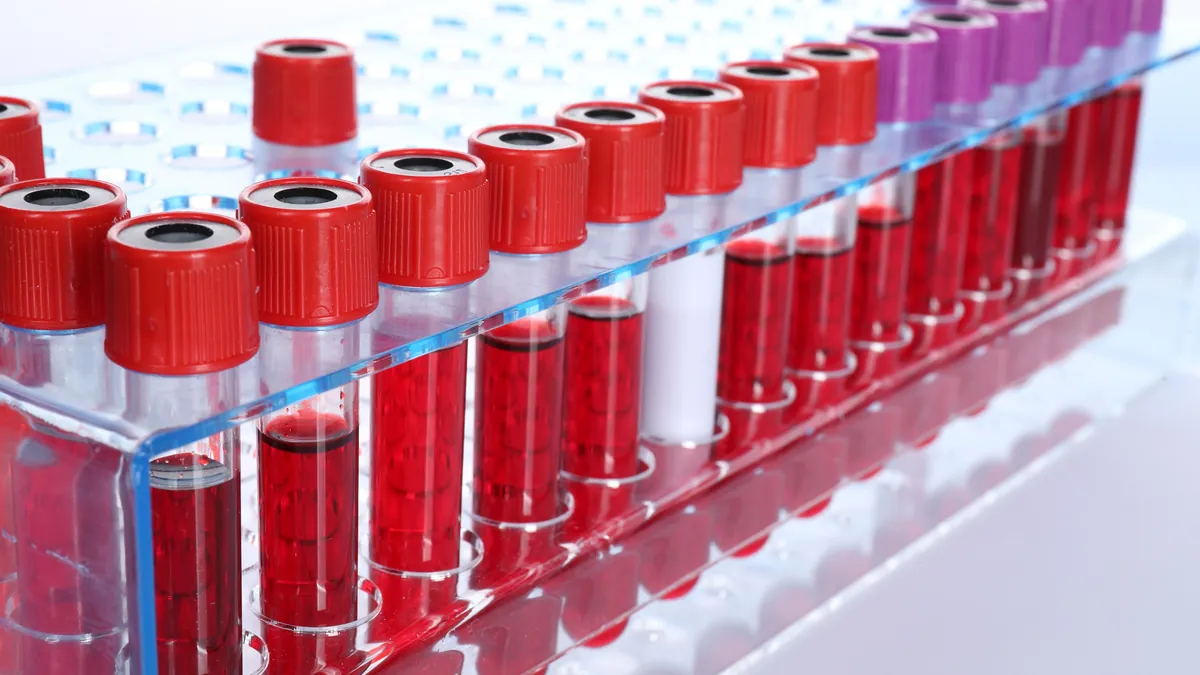
PSA (Prostate-Specific Antigen) is a protein produced by prostate cells. Measuring its level in the blood is the primary screening tool. But it is also the most misunderstood—and most misinterpreted—test.
PSA ≠ cancer. It is a marker of the prostate, not of cancer. It can be elevated for many reasons: urinary tract infection, inflammation of the prostate (prostatitis), benign prostatic hyperplasia (BPH), recent intense physical exertion… or cancer.
High PSA ≠ cancer. Normal PSA ≠ absence of cancer. A high PSA alone is never a death sentence: it’s a signal that calls for further investigation.
| PSA Value | Usual interpretation | What I do | Monitoring frequency |
|---|---|---|---|
| < 1 ng/mL | Very reassuring before age 60 | Spaced PSA testing | Every 2 years |
| 1 – 2 ng/mL | Normal — vigilance if rapid progression | PSA test + clinical examination | Annual |
| 2 – 4 ng/mL | Intermediate zone — enhanced surveillance | Annual PSA test, MRI recommended if rapid rise in PSA is expected; MRI should be considered if rapid increase is present. | Annual approach |
| 4 – 10 ng/mL | Suspicious area — additional assessment | Multiparametric MRI as a first-line treatment | According to MRI results |
| > 10 ng/mL | Highly suspicious — assessment not to be delayed | MRI and targeted biopsies likely | Quick consultation |
| Doubling speed (< 2 years) | Worrying kinetics regardless of the value | MRI ± biopsies depending on the context | Urgent consultation |
These values are indicative. PSA interpretation must always take into account age, prostate volume, and kinetics. This is what I do during every consultation.
PSA density —the ratio of PSA levels to prostate volume measured by MRI—is a more reliable indicator than the raw value. A PSA of 6 in an 80 cc prostate is less concerning than a PSA of 6 in a 25 cc prostate.
Step 2: Multiparametric MRI — the diagnostic revolution
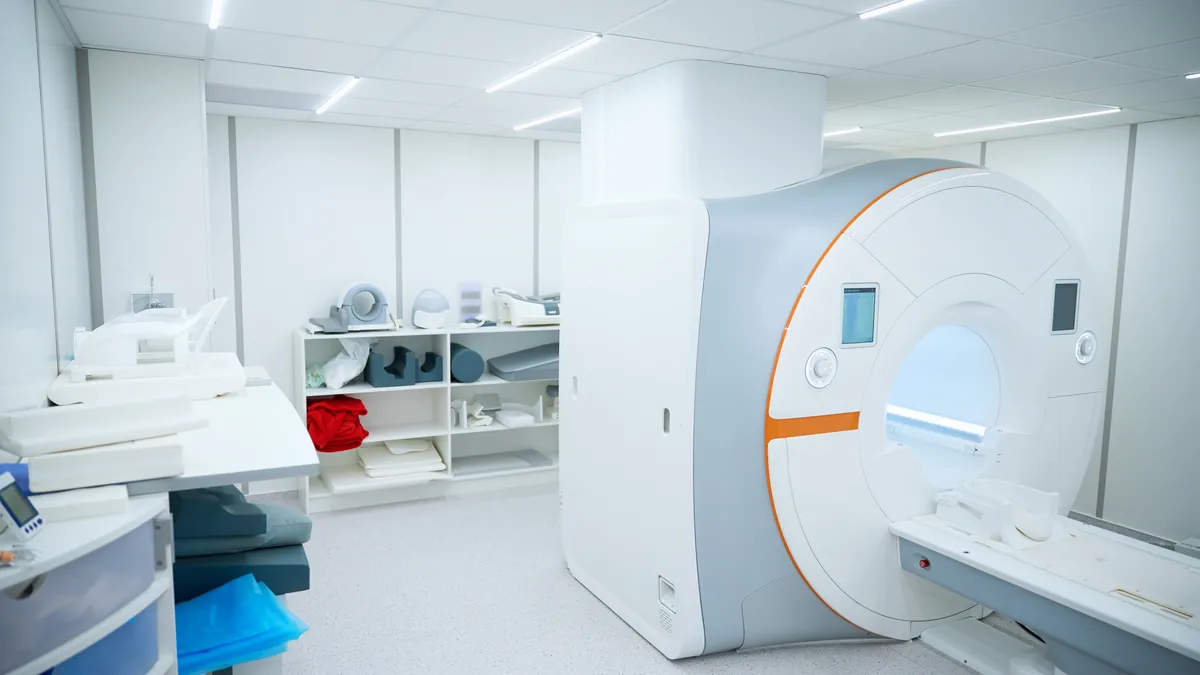
Before its development, a biopsy was routinely performed whenever the PSA level exceeded a certain threshold. Today, prostate MRI allows for precise visualization of the gland—its volume, structure, the possible presence of a suspicious lesion, and its exact location.
This examination uses the PI-RADS score , an international classification from 1 to 5, to grade the degree of suspicion of each identified lesion:
- PI-RADS 1–2 — very unlikely to be significant cancer: biopsy often not necessary.
- PI-RADS 3 — interim result: biopsy decision discussed on a case-by-case basis.
- PI-RADS 4–5 — suspicious lesion: targeted biopsy recommended.
MRI has significantly reduced the number of unnecessary biopsies and increased the detection rate of clinically significant cancers by targeting specific areas for biopsy. Fewer invasive procedures, greater diagnostic accuracy.
Step 3: Targeted prostate biopsies
If MRI identifies a suspicious lesion (PI-RADS 4 or 5), targeted prostate biopsy is recommended: MRI-guided sampling of only the suspicious areas.
This technique is radically different from the systematic "sexting" biopsies of fifteen years ago, which randomly sampled tissue from across the entire prostate. Today, the samples are targeted—fewer in number, but far more relevant.
The procedure is performed under local or general anesthesia on an outpatient basis. Antibiotics are prescribed as a preventative measure. Histological results—including the Gleason score/ISUP grade —are generally available 7 to 10 days later.
- Trans-perineal technique
- Duration: 20 to 30 minutes
- Local or general anesthesia
- Hospitalization: None (outpatient)
- Results in 7 to 10 days
The transrectal approach has been abandoned due to the risk of infection. The transperineal approach, which I use, has significantly reduced the frequency of serious infectious complications.
Step 4: The Multidisciplinary Consultation Meeting (RCP)
Every diagnosis of prostate cancer is systematically presented and discussed in a Multidisciplinary Tumor Board meeting . This is a medical and ethical obligation — and a guarantee for the patient.
The multidisciplinary tumor board (MTB) brings together urologists, oncologists, radiation oncologists, radiologists, and pathologists. Its objective is to validate the diagnosis, analyze all relevant factors (clinical stage, Gleason score, PSA, MRI), and collaboratively propose appropriate treatment options.
The result of the multidisciplinary team meeting does not impose anything on you. It is an informed, multidisciplinary recommendation — on the basis of which you will make your decision with me during a dedicated consultation.
Dr. Olivier Dumonceau
If cancer is confirmed: what happens next?
A prostate cancer diagnosis is always a difficult time. I know this, and I try to make it as clear and reassuring as possible. Here’s what I always explain to my patients after the diagnosis is confirmed.
The assessment of the extent of the disease: verifying that it is localized.
Before deciding on a treatment, it is verified that the cancer is confined to the prostate or its immediate surroundings. This staging workup generally includes:
- A pelvic MRI — usually already performed during the initial assessment.
- A PSMA PET scan — for cases of intermediate-high or high risk, to detect possible metastases. It now replaces thoraco-abdomino-pelvic CT scans and bone scintigraphy.
In the vast majority of cases diagnosed today—thanks to early detection— the disease is localized to the prostate . This opens up all curative treatment options.
Treatment options according to profile
Once a complete diagnosis has been made and discussed in a multidisciplinary team meeting, several options are available depending on the stage of the disease, the Gleason score, the PSA level, and your overall profile:
| Option | For which profile? | Main advantage | Main constraint | PSA tracking |
|---|---|---|---|---|
| Active surveillance | Very low-risk cancer, age < 70 years | No immediate treatment, quality of life preserved | Repeated biopsies, possible anxiety | PSA + periodic biopsies |
| Robotic prostatectomy | Intermediate to high risk, age < 75 years | Complete histological analysis, possible salvage by radiotherapy | Risks of incontinence and erectile dysfunction are rare and usually transient. | PSA for life (undetectable target) |
| External beam radiotherapy | Intermediate to high risk, age < 75 years | Non-invasive, no anesthesia | 30 to 40 sessions; no surgical intervention; post-radiation cystitis/rectitis | Lifetime PSA (nadir + 2) |
| Brachytherapy | Low risk, prostate < 50 cc | Single session, good results | Frequent urinary side effects | Annual PSA |
| High-intensity focused ultrafiltration (HIFU) | Focal tumor clearly identified | Conservative, few side effects | Strict selection, less hindsight | PSA + follow-up MRI |
| Hormone therapy ± radiotherapy | Locally advanced or metastatic cancer | Effective systemic treatment | Pronounced endocrine effects | PSA + bone health assessment |
I dedicate the necessary time to explaining each option during consultations. There is no universally right or wrong decision: there is only the decision that is right for your cancer, your life, and your values . To learn more, you can visit my page dedicated to robot-assisted radical prostatectomy .
Active monitoring: do not treat when it is not necessary
This is a point I want to focus on — because it’s an option that is often underestimated, and one that I apply regularly.
Diagnosing prostate cancer is important: there is no such thing as overdiagnosis . On the other hand, overtreatment must be avoided.
For very low-risk cancers—Gleason 6 / ISUP 1, PSA < 10, clinical stage T1c-T2a—active surveillance is a medically valid and recommended option. It involves not treating immediately, but rigorously monitoring the progression of the disease with regular PSA testing, MRI, and follow-up biopsies.
Several large-scale studies — notably ProtecT and PIVOT — have shown that for these low-grade cancers, specific mortality is the same whether the patient is treated immediately or placed under active surveillance, over 10 to 15 years of follow-up.
A low-grade prostate cancer, when closely monitored, can remain stable for years without ever requiring treatment. When the indication is appropriate, avoiding surgery and radiation is a form of treatment.
Dr. Olivier Dumonceau
Active monitoring is not abandonment. It is an informed choice that preserves quality of life — and can be reassessed at any time if the disease progresses.
FAQ: Your questions about prostate screening
At what age should I get tested?
Starting at age 50 for men without any particular risk factors, with an annual PSA test. Starting at age 45 if you have a family history (father, brother) of prostate cancer. Starting at age 40–45 if you are of African or Afro-Caribbean descent. And at any age if your doctor reports an abnormality. These recommendations are individualized: what applies to your neighbor may not apply to you.
My PSA is slightly elevated — should I be worried?
Not necessarily. A high PSA level doesn’t automatically mean cancer. It can be elevated in cases of benign prostatic hyperplasia (BPH), urinary tract infection, prostatitis, or even after intense physical exertion. What interests me most is the kinetics—the evolution of PSA over time—and its density relative to the prostate volume. A slightly elevated PSA level warrants a urological consultation, not panic.
Is an MRI mandatory if the PSA level is high?
No—but I highly recommend it before any biopsy. Multiparametric MRI has become the gold standard examination before biopsy according to European guidelines (EAU 2024). It allows for the precise identification of suspicious areas, avoids many unnecessary biopsies, and allows for targeted sampling if a lesion is present. It is more precise, less invasive, and more comfortable for the patient.
Are prostate biopsies painful?
MRI-guided fusion biopsies are performed under local or general anesthesia. Discomfort is usually minimal. Transient side effects are possible in the following days: traces of blood in the urine, stool, or semen (normal and temporary), and a slight fever in the first 24 hours. I prescribe antibiotics as a preventative measure. In our practice, serious complications are rare, especially since the introduction of transperineal biopsies, rather than transrectal ones.
Is it possible to have prostate cancer without urinary symptoms?
Yes—and that’s precisely why screening is essential. In its early stages, prostate cancer generally presents no symptoms. Urinary problems—weak stream, frequent urges, leakage—are most often related to benign prostatic hyperplasia (BPH), not cancer. Waiting for symptoms to appear before seeking medical help risks a late diagnosis. That’s why I recommend annual PSA testing starting at age 50, even in perfect health.
What is active surveillance — and is it really safe?
Active surveillance involves not immediately treating a very low-risk cancer, but rather monitoring it rigorously: regular PSA tests, follow-up MRIs, and periodic biopsies. Large studies (ProtecT, PIVOT) have shown that for low-grade cancers, this approach does not compromise 10- to 15-year survival. It is a treatment option that I regularly recommend—and one that I often consider preferable to immediate treatment for certain patient profiles.
Is prostate cancer screening covered by insurance?
PSA testing is covered by French National Health Insurance (Assurance Maladie) with a doctor’s prescription. Prostate MRI is also covered as part of the coordinated care pathway. Fusion biopsies are reimbursed in healthcare facilities according to the current fee schedule. Your out-of-pocket expenses will depend on your supplemental health insurance. I will explain the details during your consultation.
Can I get a second opinion before deciding on a treatment?
Absolutely—and I encourage it. Taking the time for a second opinion is a wise and legitimate step when faced with such an important diagnosis. I regularly see patients who come seeking a second opinion after consulting another specialist. What I offer is a thorough review of the entire medical file, a transparent discussion of the options, and the outcome of a multidisciplinary consultation if necessary.
My father had prostate cancer — am I necessarily going to get it?
No—a family history increases the risk, but it’s not a death sentence. It justifies earlier (starting at age 45) and more frequent screening. In some cases where several family members are affected, or if a genetic mutation (BRCA2) is suspected, a consultation with an oncogeneticist may be helpful. But the vast majority of men with a family history of prostate cancer will not develop it—especially if screening is followed properly.
Key takeaways

The essentials in five points
- Prostate cancer is common — but it is also one of the cancers that is most treatable when detected early .
- Regular PSA testing from age 50 — or 45 in the case of risk factors — is a simple, quick and potentially decisive step.
- The assessment is a progressive process: PSA testing, then MRI, then targeted biopsies only if necessary. Nothing is irreversible at each stage.
- In most cases, the assessment is reassuring. But when it is not, early diagnosis changes everything .
- The goal of screening is simple: to give you time to understand, decide and choose the right treatment .
My role is not to alarm you. My role is to support you, with the right tests, at the right time. The best time to have a prostate exam is before you have any reason to worry. Not after.
Assess your prostate
If you recognize yourself in this situation, let’s take the time to discuss it together in a consultation.
Make an appointment Screening in practice
01 42 68 83 30 82 Bd de Courcelles, Paris 17th contact@dumonceau-urologie.fr