
Treating prostate cancer with precision, preserving quality of life. Da Vinci Xi robotic surgery explained — procedure, nerve preservation, recovery, risks and alternatives.
A diagnosis of prostate cancer. Now what?
"Doctor, what do we do?" This is the question all patients ask after a diagnosis of prostate cancer.
My first answer: you have time to make a good decision . In most cases, localized prostate cancer is effectively treated, provided that an informed, and not rushed, decision is made.
The goal is not to go fast. The goal is to choose the right treatment.
Dr. Olivier Dumonceau
For over 20 years, I have been performing radical prostatectomies using robot-assisted surgery with the Da Vinci system. The goal: to treat the cancer precisely, while preserving continence and erectile function as much as possible.
But this surgery is not the only option. Active surveillance, radiotherapy, brachytherapy, HIFU… all these alternatives exist and should be discussed based on your individual situation.
My role is not to steer you towards surgery. My role is to help you choose what is best for you.
Prostate cancer: understanding before deciding
Quick anatomical review
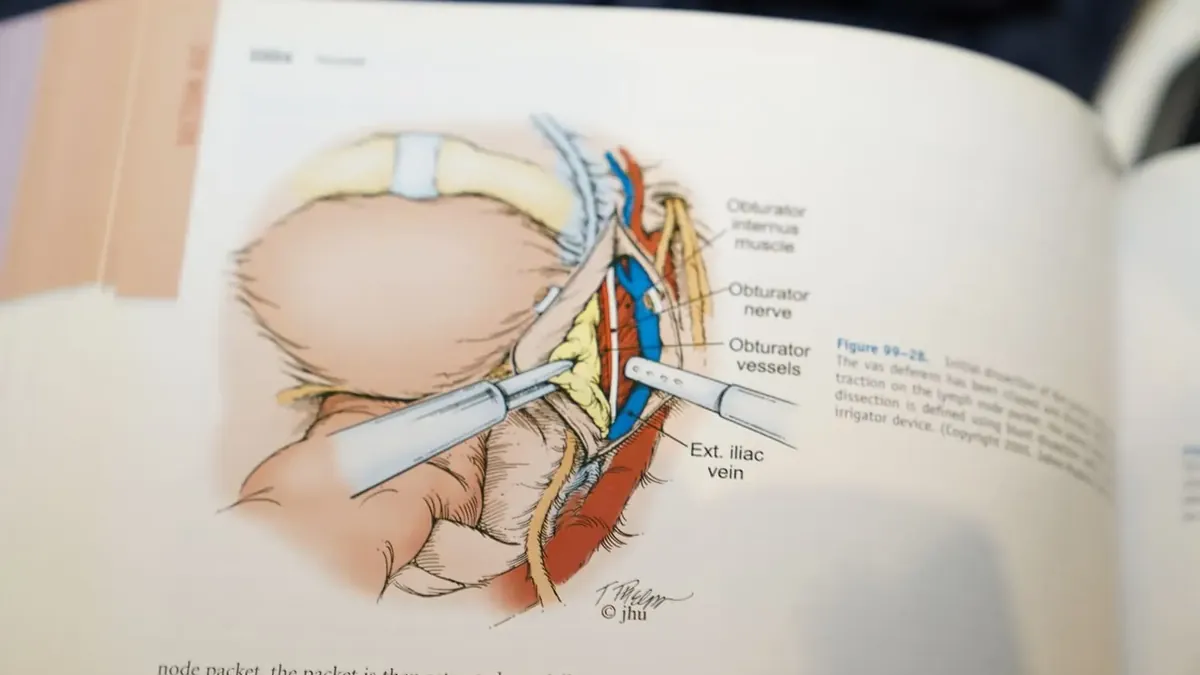
The prostate is a walnut-sized gland located below the bladder and in front of the rectum. It surrounds the urethra — the tube through which urine leaves the bladder — and produces part of the seminal fluid.
Two anatomical structures are closely linked to the prostate and its surgery:
- The urinary sphincters control continence. Preserving them is essential to avoid urinary leakage after surgery.
- The neurovascular bundles (or erectile tissues) — located on either side of the prostate, control erectile function. Their preservation, when cancer allows, is one of the major goals of robotic surgery.
When does prostate cancer require surgery?
Not all prostate cancers require a prostatectomy. The decision depends on several factors that we will assess together during your consultation:
- Cancer stage — T1, T2 = localized; T3 = locally advanced.
- The Gleason score / ISUP Grade — it measures the aggressiveness of tumor cells.
- The PSA level and its kinetics.
- Age and life expectancy — surgery is generally offered to patients whose life expectancy exceeds 10 years.
- General health status and contraindications to general anesthesia.
- The patient’s preferences — particularly with regard to potential side effects and quality of life.
For very low-risk cancers, active surveillance is preferable to immediate treatment. This is an approach I regularly adopt, and one I often find underestimated: not operating when it is not necessary is also a courageous medical decision.
Why robotic surgery? What the Da Vinci Xi really changes?
What the human eye cannot do alone
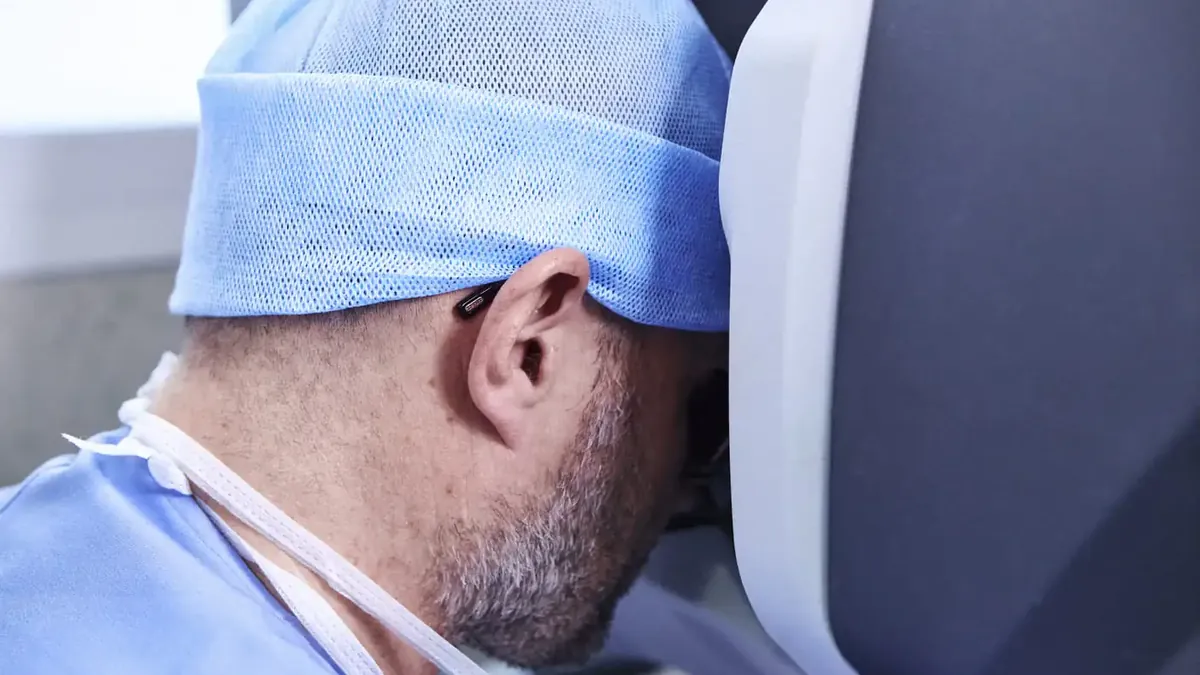
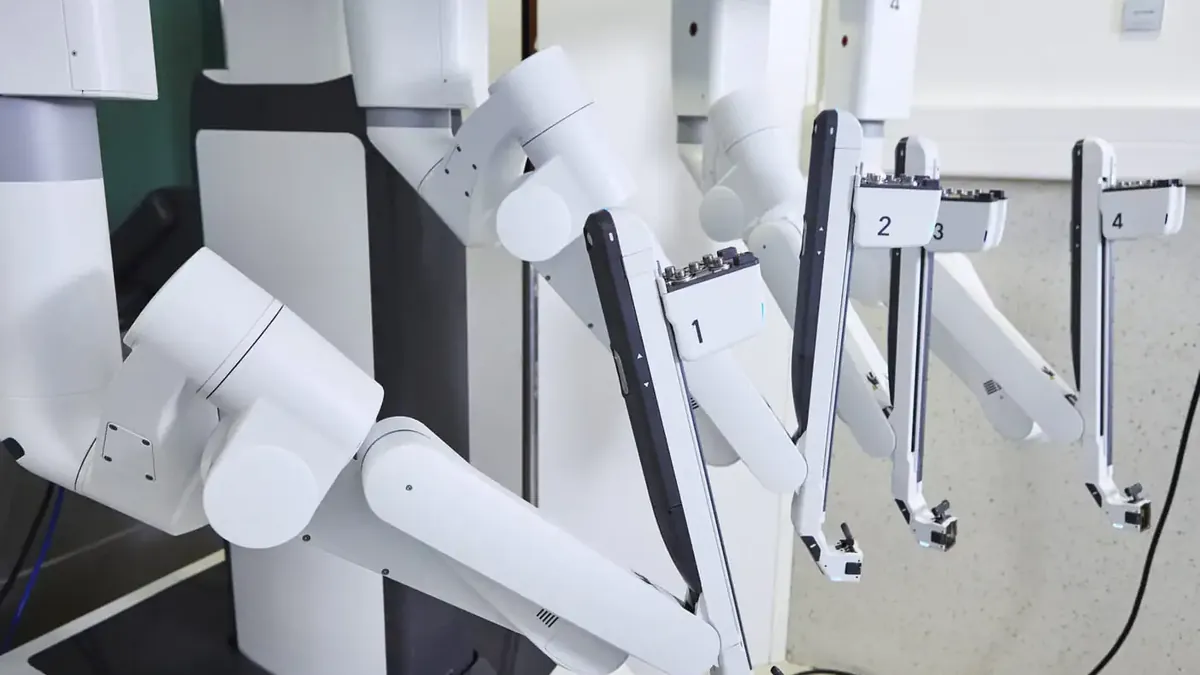
I have been performing prostatectomies for over 20 years. The difference between the open surgery I learned and the robotic surgery I practice today is fundamental — not because the robot operates in my place, but because it gives me capabilities that conventional surgery cannot offer.
What this changes in practical terms:
- Magnifying HD 3D vision — I see anatomical structures with a precision impossible in open surgery.
- Ultra-thin and articulated instruments — they allow for extremely fine dissection, particularly of sphincters and neurovascular bundles.
- Shaking eliminated — the robot filters out micromovements of the hand, making the gesture extremely stable.
- Minimal incisions — 5 incisions of 5 to 12 mm, instead of one large abdominal incision.
- Reduced blood loss — less than 200 ml on average; transfusion has become extremely rare.
Outpatient care since 2016: a first in France
In 2016, our team performed the first outpatient robotic prostatectomy in France . This was not a technical feat for the sake of the feat — it was a demonstration that with robotics and a rigorous enhanced recovery protocol, some patients can return home on the same day as their prostatectomy.
Today, depending on the case, patients are discharged either on the day of the procedure or the following day. This is a tangible improvement in their comfort and proof that well-conducted minimally invasive surgery truly reduces the impact on daily life.
Robotics simplifies surgery, shortens operating times, reduces the risk of bleeding and postoperative complications, and decreases hospital stays. All of this means less stress for the patient—and a faster start to recovery.
How is robot-assisted prostatectomy performed?
Before the procedure: the pre-operative assessment
A radical prostatectomy is not something to be undertaken lightly. Before the procedure, a complete assessment is carried out:
- Multiparametric MRI of the prostate — to accurately assess the local extent of the tumor and guide the surgical strategy.
- Discussion in a Multidisciplinary Consultation Meeting (RCP) — to validate the therapeutic decision with the entire oncology team.
- Complete biological assessment.
- Anesthesia consultation.
To learn everything about the preparation, also consult my dedicated article: Robotic prostatectomy: how to prepare properly .
The day of the operation: the five steps
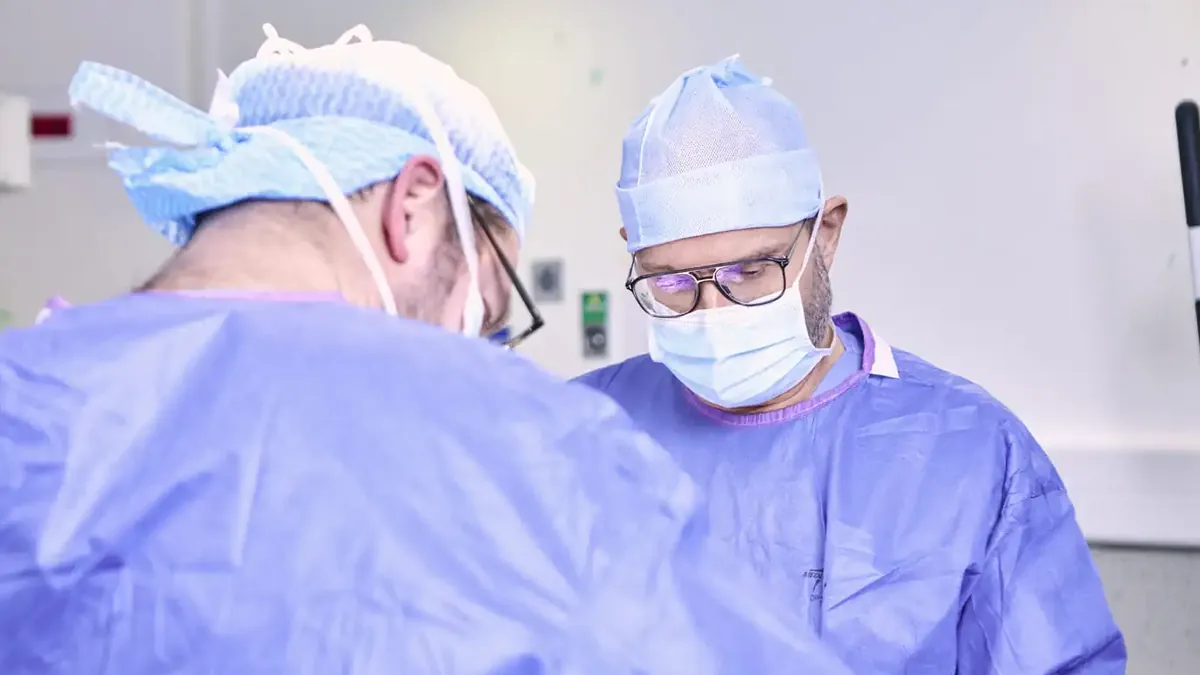
The procedure takes place under general anesthesia, in an operating room equipped with the Da Vinci Xi robot. Here are the steps I perform:
- Patient and robot setup: Trendelenburg position (patient slightly inclined head down) to clear the pelvic cavity.
- Minimally invasive incisions: 5 incisions of 5 to 12 mm in the abdomen, to introduce the instruments and the 3D camera.
- Robot-assisted dissection. Removal of the prostate and seminal vesicles, with preservation of the neurovascular bundles if the anatomy and tumor stage allow it.
- Vesicourethral anastomosis: Reconnection of the bladder to the urethra after removal of the prostate, restoring urinary continuity.
- Insertion of a urinary catheter for 7 to 10 days, to allow the anastomosis to heal completely.
- Duration: 2 to 2.5 hours
- General anesthesia
- Hospitalization for 1 to 2 days (sometimes outpatient on day 0)
- 7-day home urinary catheter
- Work stoppage of 4 to 6 weeks
Nerve preservation: the nerve-sparing technique
This is one of the most important aspects of surgery, and one of the most frequently discussed in consultation: can erections be preserved?
The answer is: it depends. Preservation of the neurovascular bundles is possible when the cancer is localized and the surgical margins allow it. When feasible, it significantly improves the chances of erectile recovery after the operation.
If the cancer is in contact with a nerve bundle, I sacrifice it . There’s no question of compromising surgical margins in the name of preserving erectile function. It’s a decision I always explain clearly before the operation, and it’s made taking into account the MRI and biopsies.
Recovery: from discharge to long-term follow-up
This is often what worries patients most—sometimes even more than the operation itself. I understand this concern and I take it seriously. Here’s what I explain to each of my patients.
| Period | What’s happening | Instructions and follow-up |
|---|---|---|
| Day 0 – Day 1 | Waking up in the recovery room, urinary catheter in place, minimal pain | Assisted mobilization from day 0, appropriate pain medication, room monitoring |
| Day 1 – Day 2 | Usual discharge if recovery is satisfactory (sometimes outpatient on day 0) | Home probe, hygiene instructions, emergency number provided |
| J7 | Removal of the urinary catheter during a consultation | Monitoring of immediate post-operative recovery |
| 6 weeks | Gradual resumption of light activities; urinary incontinence still possible (approximately 20% of patients) | Follow-up consultation, PSA test, histological results, prescription of physiotherapy and pro-erectile treatments if necessary |
| 6 months | Start of regular follow-up consultations | Clinical examination, PSA monitoring, assessment of urinary and erectile function |
| Every 6 months for 15 years | Follow-up consultations | Clinical examination, PSA testing |
Perineal rehabilitation
It is only necessary for patients whose urinary incontinence persists 6 weeks after the procedure . It is carried out by a physiotherapist specializing in this practice and is accompanied by regular exercises at home.
Erectile recovery
Erectile recovery after prostatectomy takes longer than the recovery of continence. This is a fact I frankly explain to every patient, because unrealistic expectations cause unnecessary suffering.
Even when the nerve bundles have been preserved, the erectile nerves have been manipulated, and they can take time to recover. This period varies from a few months to two years, depending on the patient. During this time, I recommend early erectile rehabilitation : PDE5 inhibitors (Viagra, Cialis, etc.), vacuum pump therapy, and in some cases, intracavernosal injections to maintain oxygenation of the cavernous tissue and accelerate nerve recovery.
In cases where erectile function remains insufficient after 18 to 24 months, other options can be considered, including the implantation of a hydraulic penile implant . This is a discussion I regularly have with my patients, and it doesn’t represent a failure but rather a further step in their overall treatment.
The risks of prostatectomy: complete information
No surgery is without risk. What I must do — and what I intend to do — is explain them to you clearly, without minimizing them, and tell you what I am putting in place to reduce them.
| Complication / effect | Estimated frequency | What I am putting in place |
|---|---|---|
| Urinary leakage (transient incontinence) | Frequent in the immediate postoperative period | Perineal rehabilitation from 6 weeks onwards by a specialist physiotherapist if necessary |
| Post-operative erectile dysfunction | Variable depending on the possibility of nerve preservation | Nerve-sparing if possible, early erectile rehabilitation |
| Positive surgical margins | 5 to 15% depending on the stage | Close PSA monitoring, additional treatment if necessary |
| Intraoperative bleeding | Very rare with robotics (< 200 ml on average) | 3D HD vision, precise robot-assisted hemostasis |
| Anastomotic complications | Rare (< 2%) | Proven technique, anastomosis control |
| Anastomosis stenosis | Rare (1 to 2%) | Endoscopic monitoring if clinical signs are present |
| Thromboembolic complications | Weak | Compression stockings, preventive heparin therapy |
Informed consent is a crucial moment in our relationship. I take the time necessary to ensure you understand exactly what you are agreeing to, and what we will do together to achieve the best possible outcome.
Dr. Olivier Dumonceau
For whom is robot-assisted radical prostatectomy indicated?
The right directions
- Localized prostate cancer (stages T1–T2) at intermediate or high risk.
- Locally advanced cancer (T3a) in some selected cases, in multidisciplinary discussion.
- Life expectancy greater than 10 years , to fully benefit from the curative treatment.
- Good general condition , compatible with general anesthesia.
- Desire for a radical treatment with the best possible preservation of urinary and erectile function.
Cases where I propose a different approach
- Metastatic cancer — surgery is not indicated; systemic treatment is necessary.
- Very low-risk cancer — active surveillance may be preferable to any immediate treatment.
- Contraindication to general anesthesia — radiotherapy will be discussed.
- Life expectancy less than 10 years — the benefit/risk ratio may not be favorable.
- Refusal of potential side effects — depending on the patient’s priorities, another option may be preferable.
My role is to present you with all the options, with their advantages and disadvantages, and to help you choose the one that best suits your cancer and your life.
FAQ: Your questions about robotic prostatectomy
How long is the hospital stay after a robotic prostatectomy?
Generally, 1 to 2 days. Since 2016, our team has offered outpatient prostatectomy for selected patients (returning home the same day). This was a first in France, initiated by us, and is now practiced in a few leading centers. For most patients, discharge takes place the day after the procedure.
Will we inevitably experience urinary incontinence after the operation?
Urinary leakage in the weeks following catheter removal is common. This is expected and temporary for the vast majority of patients. The keys to normal continence are good sphincter control during the procedure and, if necessary, pelvic floor rehabilitation physiotherapy.
Can erections be preserved after surgery?
It’s possible, depending on the case. Nerve-sparing surgery—which preserves the neurovascular bundles responsible for erections—is performed when the cancer allows. When this procedure is carried out, the majority of patients regain satisfactory erections within 6 to 24 months.
Is prostatectomy the only option for localized cancer?
No. Active surveillance (for very low-risk cancers), focal therapies (HIFU), external beam radiation therapy, and brachytherapy are valid alternatives depending on the patient’s profile. Each situation is discussed in a multidisciplinary tumor board meeting, and the final decision always rests with the patient, after receiving complete information on the advantages and disadvantages of each option.
Is it possible to have a prostatectomy performed on an outpatient basis?
Yes — in certain selected cases. Our team was the first in France to perform outpatient robotic prostatectomy in 2016. This option is offered to patients in good general health, without major comorbidities, living within two hours of the clinic, and with a caregiver at home. It is not suitable for everyone, but when possible, it significantly improves patient comfort.
How much does a robotic prostatectomy cost? Is it covered by insurance?
Radical prostatectomy for prostate cancer is covered by French National Health Insurance (Assurance Maladie) as part of the coordinated care pathway. If the procedure is performed in the private sector, the remaining cost for additional fees will depend on your supplemental health insurance (mutuelle). I will refer you to appropriate facilities during your consultation.
How long after the operation should you stop working?
For office or sedentary work: generally 4 weeks off work. For physical work: 4 to 6 weeks depending on progress. Driving is possible as soon as you feel comfortable without painkillers and without abdominal discomfort—generally after 2 to 3 weeks. Resuming walking is encouraged from the first week; intense sports should be gradually resumed after 6 weeks.
Is follow-up after surgery important?
Essential. PSA levels are measured at 6 weeks, 6 months, and then every 6 months for 15 years. An undetectable PSA level (< 0.07 ng/mL) after surgery indicates complete surgical success. Any PSA increase must be addressed promptly to assess the need for further treatment (salvage radiotherapy). This is why follow-up is an integral part of the treatment.
What if the cancer recurs after surgery?
Prostatectomy has the advantage of leaving other options open in case of recurrence, notably salvage radiotherapy to the prostatic fossa, which can be effective if the recurrence is detected early (PSA < 0.2 ng/mL). This is one of the advantages of surgery compared to initial radiotherapy: if the latter fails, salvage surgery is much more complex. The choice of initial treatment therefore has implications for future options.
Key takeaways
The essentials in five points
- Prostate cancer is not an immediate emergency, but a decision to be made with rigor and information .
- Robot-assisted radical prostatectomy is, in the right profiles, one of the most effective options for treating localized cancer.
- The objective: cancer control + maximum preservation of continence and erectile function , when possible.
- This is not the only option — nor the right one for everyone. Each decision depends on the cancer, your health status, and your quality of life priorities.
- You should not face this diagnosis alone: you need to understand, decide, and be supported.
My role is not to steer you towards surgery. My role is to help you make the right choice, with full knowledge of the facts.
Let’s discuss it together
If you recognize yourself in this situation, let’s schedule an appointment to review your case and your options.
Make an appointment to treat localized cancer
01 42 68 83 30 82 Bd de Courcelles, Paris 17th contact@dumonceau-urologie.fr